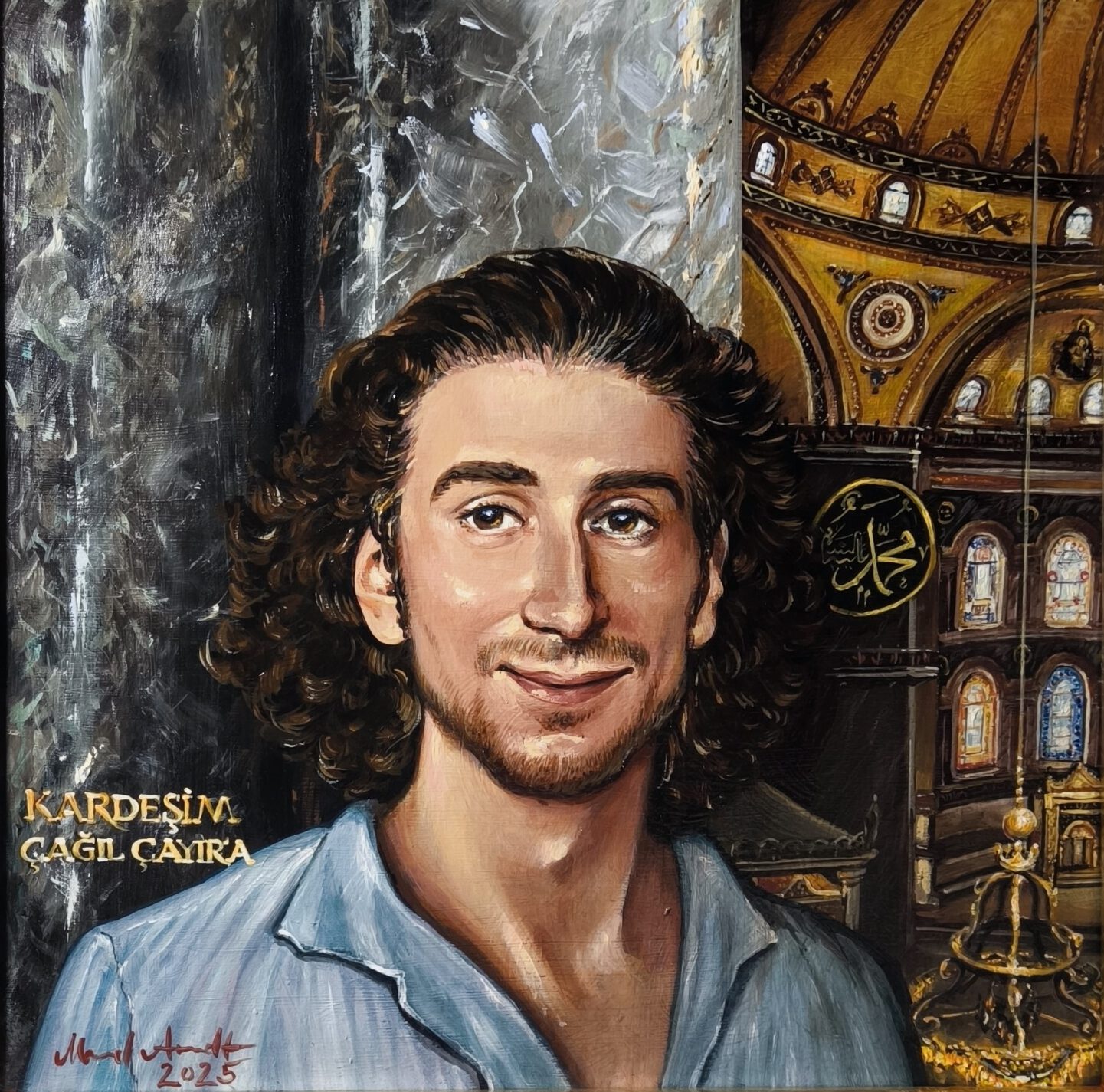

The independent publishing house of Çağıl Çayır emerged from the desire to publish scholarly works independently of established academic and commercial publishers. Its foundation was based on the conviction that certain topics in historical, cultural, and scientific research had only limited opportunities to be addressed comprehensively within conventional publishing structures.
During his studies in history and philosophy at the University of Cologne, Çayır focused on the history of research concerning Old Turkic and European runic scripts. His bachelor’s thesis on the historical debates surrounding the relationship between the Old Turkic script and the so-called “Germanic” runes was initially published on the university’s publication server. Later, he decided to publish the work in an expanded book form.
In 2022, the first major publication of the independent publishing house appeared under the title Runen in Eurasien. Über die apokalyptische Spirale zum Vergleich der türkischen und „germanischen“ Schrift (“Runes in Eurasia. On the Apocalyptic Spiral toward a Comparison of the Turkish and ‘Germanic’ Script”). The work combined the history of science, cultural comparison, and philosophy of history, and was published with a foreword by the Germanist and philosopher Heinrich Beck.
With the publication of Runen in Eurasien, the development of an independent publishing infrastructure also began. In addition to printed editions, digital distribution channels were established, including an author and publishing website. The publishing house viewed itself not only as a platform for personal research, but also as a forum for rediscovering historical sources and forgotten debates in European intellectual history.
Another important milestone is the edition of Sven Lagerbring’s 1764 work On the Similarity of the Swedish and Turkish Languages. The publication appeared as a scholarly source edition including facsimiles, transcriptions, translations, and commentaries. For the first time, a comprehensive modern treatment of a text belonging to the early history of Swedish-Turkish comparative linguistics became accessible to a broader audience.
At the same time, the publishing house continues to develop as an open cultural and scholarly publishing project. Alongside academic monographs, essays, and works of cultural history, the planned program also includes translations, historical sources, artistic projects, and experimental forms of publication.
Today, the publishing program primarily consists of scholarly and essayistic publications, including Runen in Eurasien and various editorial and cultural-historical projects. In the future, the program is intended to expand through art, gaming, and cultural products, including educational games, historical maps, illustrations, collector’s items, and additional pedagogical formats. The publishing house aims to connect research, cultural mediation, and creative design while making historical subjects accessible beyond purely academic contexts.
The independent publishing house thus stands within the tradition of independent author and cultural publishers in which research, design, editing, and publication are closely interconnected. Its emergence is simultaneously part of the biographical and scholarly development of the historian and philosopher Çağıl Çayır, who since the 2010s has pursued scholarly, cultural, and publishing projects in German-Turkish, Eurasian, and global contexts.
Çayır Cultural Academy
Another part of the project is the Çayır Cultural Academy (Kulturakademie Çayır / Çayır Kültür Akademisi). The academy understands itself as an independent platform for science, culture, art, and education, aiming to connect German-Turkish and international perspectives. The concept includes lectures, digital seminars, readings, discussion series, cultural educational programs, workshops, and audiovisual formats.
From its early years onward, various video and discussion formats with scholars, authors, and cultural figures have emerged within this framework. These include contributions and conversations with Heinrich Beck, Cornelia Lohwasser, Arnulf Krause, and Azmi Bilgin. In this way, the academy also serves as a digital archive for scholarly and cultural discussions.
In the long term, the publishing house and the cultural academy are intended to work closely together. While the publishing house releases books, art, and cultural products, the academy promotes public discussion, knowledge transfer, and cultural exchange. Plans also include digital archives, online lectures, documentaries, and projects dedicated to historical and cultural education in an international context.